Understanding Digital Eye Strain: Causes and Symptoms
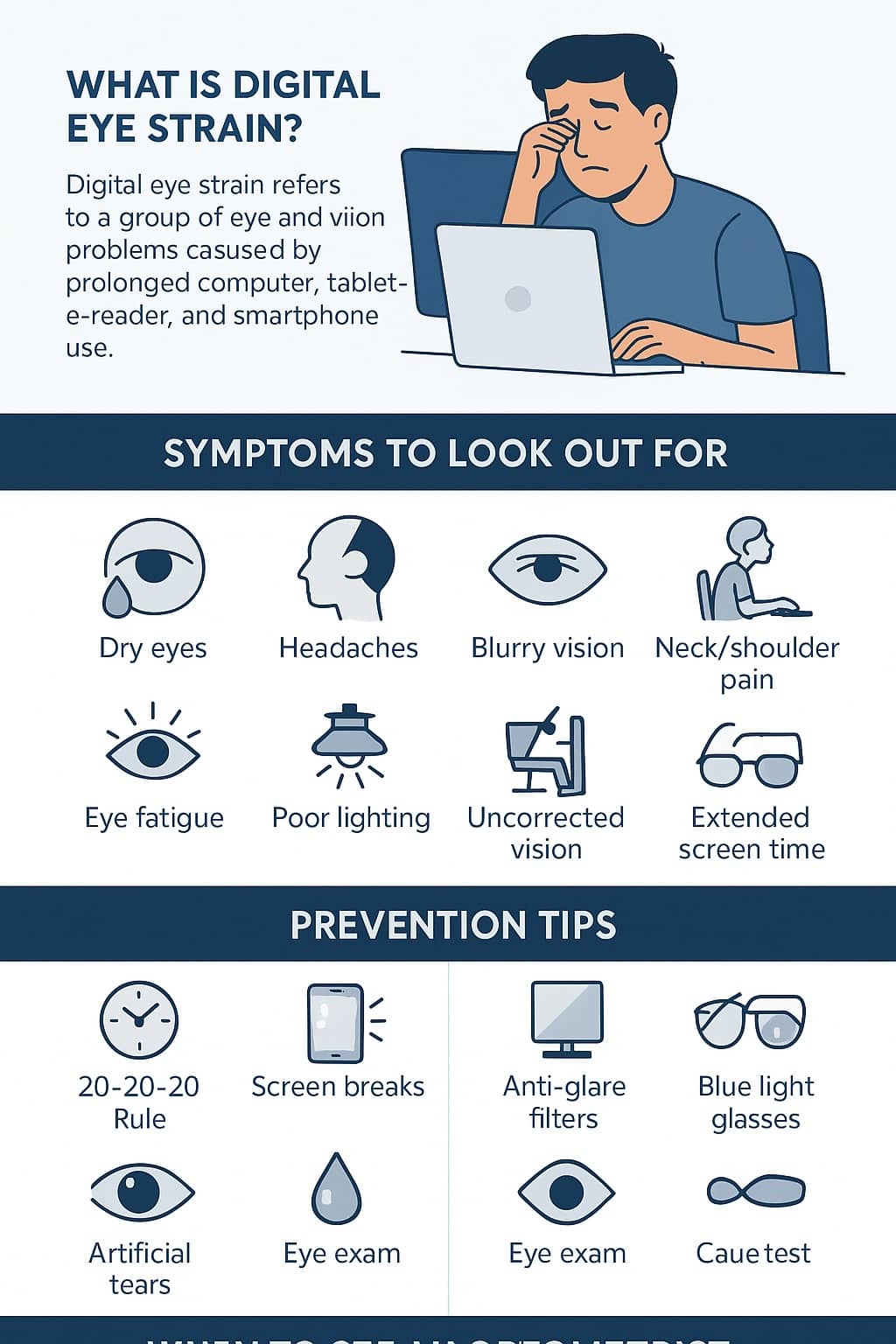
In today's digital age, many individuals find themselves spending prolonged hours in front of screens, whether for work or leisure. This excessive screen time can lead to a condition known as Digital Eye Strain, which encompasses a range of uncomfortable symptoms affecting the eyes. The main causes of digital eye strain include factors like improper lighting, glare from screens, and poor viewing distances. Other contributing factors can be related to the duration of screen exposure and the absence of regular breaks, compounding the risks associated with this increasingly common ailment.
The symptoms of Digital Eye Strain can manifest in various ways, making it crucial to recognize them early. Common symptoms include eye fatigue, dryness, blurred vision, and difficulty focusing. Individuals may also experience headaches, neck, or shoulder pain as a result of poor ergonomics or prolonged screen usage. To combat these symptoms, it is essential to implement strategies such as the 20-20-20 rule—every 20 minutes, look at something 20 feet away for at least 20 seconds—as well as ensuring proper lighting and screen positioning.
Counter-Strike is a highly popular first-person shooter game that has captivated millions of players worldwide. Known for its tactical gameplay and emphasis on teamwork, it pits teams of terrorists against counter-terrorists in various objective-based scenarios. Players can enhance their gaming experience with various gear, and you can check out the Top 10 Phone Accessories for Eye Strain to ensure comfortable gameplay!
Top 5 Tips to Prevent Eye Strain During Extended Screen Time
In today's digital age, many of us spend extended periods staring at screens, whether for work or recreation. This can lead to uncomfortable symptoms known as eye strain. To effectively prevent eye strain, it's essential to adopt a few proactive habits. First, consider implementing the 20-20-20 rule: every 20 minutes, take a 20-second break to look at something 20 feet away. This simple practice helps relax your eye muscles and reduces fatigue. Additionally, ensure that your workspace is well-lit, as harsh lighting can exacerbate eye discomfort.
Second, remember to blink frequently to keep your eyes moist and avoid dryness. You might also want to adjust your screen settings; increasing the text size can make reading more comfortable, while reducing blue light exposure can alleviate strain. Using anti-glare screens and maintaining a proper distance between your eyes and the screen can further minimize discomfort. By following these tips, you can effectively protect your vision and maintain eye health during prolonged screen time.
Is Blue Light the Real Villain? Debunking Myths About Screen Time and Eye Health
In today's digital age, the concern surrounding blue light exposure has escalated dramatically. Many believe that the blue light emitted from screens is a significant contributor to eye strain and potential long-term damage. However, recent studies suggest that while blue light can indeed disrupt sleep patterns by inhibiting melatonin production, it is not necessarily the main culprit behind eye discomfort. Instead, the symptoms of digital eye strain may be more closely linked to prolonged screen time and poor ergonomics. As we spend hours staring at our devices, it is essential to consider factors such as screen brightness, distance, and the 20-20-20 rule, which advocates looking away from your screen every 20 minutes at something 20 feet away for at least 20 seconds.
Moreover, the myth that blue light is inherently harmful stems from a misunderstanding of its relevance to overall eye health. According to eye care professionals, the discomfort experienced after extended screen use is often due to dryness, fatigue, and glare rather than the blue light itself. Understanding these nuances can help individuals make informed decisions about their screen time habits. Simple adjustments like using anti-reflective coatings on glasses, ensuring proper lighting in your workspace, and taking regular breaks can significantly alleviate the impact of excessive screen exposure without vilifying blue light as the primary foe of our eye health.